
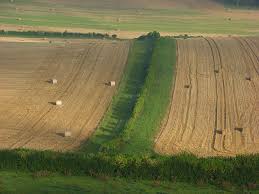
FARMLAND values in England and Wales continued to soften in the final quarter of 2025 – with experts predicting a selective but active market as the sector moves into 2026.
Nationally, average arable land values fell 0.6% in Q4, easing from a sharper 1.5 per cent decline in the previous quarter, finishing the year at £9,494 per acre. Pasture land values also moderated, down 0.4% compared with a 1.2 per cent drop in Q3, standing at £7,778 per acre.
Chris Anderson, rural partner at Carter Jonas in Truro, highlighted the regional differences behind these averages.
“National figures mask significant variation across the country,” he said. “The South West continues to command considerably higher values, and even within regions there can be price differences of up to 100 per cent at a micro level.”




In the South West, average arable land is £10,750 per acre, while pasture stands at £8,750 per acre, down 2.3 per cent and 2.7 per cent respectively over the year.
The farmland market has undergone a period of adjustment over the past year as economic and political pressures have taken effect. Speculation ahead of the autumn budget kept buyers cautious, yet measures announced ultimately did little to alter the broader outlook.
Last month, the government raised the APR and BPR threshold from £1-million to £2.5-million, offering breathing space and much-needed stability for family farms and rural businesses.
“The increase should boost confidence in holding or investing in assets,” Mr Anderson said.
Despite this positive development, structural challenges continue to shape the market. Commodity price volatility, tightening margins and uncertainty surrounding environmental schemes remain key considerations for potential buyers. Labour costs are rising, while the launch of the Sustainable Farming Incentive has been delayed.
Financing remains another critical factor. Higher interest rates affect both new borrowing and the servicing of existing debt.
Sophie Davidson, research associate at Carter Jonas, noted: “Oxford Economics forecasts two Bank Rate cuts in 2026, down to 3.25 per cent by year-end. This is a positive shift, but small- to medium-scale farmers may still struggle to access affordable credit.”
Looking ahead, 2026 is expected to bring a selective but active market, with quality farmland maintaining a premium. Commercial farming buyers and those with rollover funds remain active, but non-agricultural buyers – particularly institutional and environmental purchasers – are increasingly prominent. Their limited exposure to farming challenges gives them an advantage, and they may capitalise on a period of lower competition in the land market.
Interest in natural capital opportunities, including carbon credits and biodiversity net gain (BNG), is also growing. The government’s plans to bring Nationally Significant Infrastructure Projects under BNG from May 2026 are expected to create significant opportunities for landowners nationwide, driven by large-scale habitat creation and enhancement requirements.
“Selectivity has increased, but the underlying fundamentals remain robust,” Mr Anderson concluded. “We are heading into 2026 with broadly balanced market conditions. While buyers are more cautious, opportunities remain for those prepared to invest strategically.”
Comments
We've recently changed our login process. If you have an account for commenting, you will need to re-register on the login window.
This article has no comments yet. Be the first to leave a comment.