
These plans can comprise of a number of different reasonings – ranging from permission to replace windows or listed building consent ranging up to large house building developments or changing of use of a building, for instance, from an office to a café, or flats.
Within this large and often complex system, there are a number of formats from which planning advice and approval can be sought.
These range from full applications where all the details which comprise a proposed development or work to a building are submitted, to outline applications, where further details are yet to be confirmed, for example, an outline application with reserved matters for appearance may not confirm the final proposed development but rather seek permission in principle.

.jpg?width=209&height=140&crop=209:145,smart&quality=75)


An example of this is one for an outline permission for 20 dwellings on land with reserved matters for appearance and scale; the reserved matters would require further permission later for their inclusion.
Other types of applications include pre-application advice requests, where would-be developers submit often outline proposals to a local authority to ascertain whether it is likely to gain support or not prior to submitting a planning application.
The vast majority of applications are decided by planning officers employed by a local authority under ‘delegated powers’, meaning they do so on behalf of their employer, however, some applications are ‘called in’ by local councillors to be discussed at an area’s strategic planning committee meeting, meaning the final decision rests with a committee of councillors.
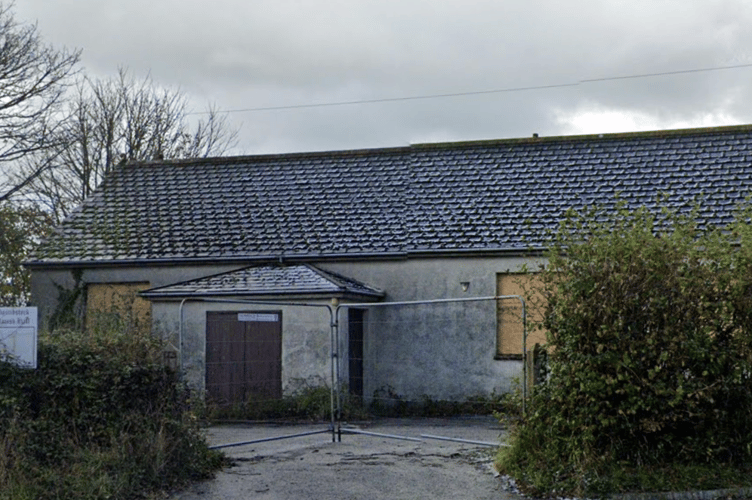
Potential approval for parish hall demolition
THE demolition of a structurally condemned parish hall with a replacement in the form of a single dwelling has the ‘potential for approval’.
Cornwall Council responded to a pre-application advice enquiry seeking the council’s view on plans to demolish the disused village hall in Poundstock and to replace it with a single dwelling.
A pre-application advice enquiry is a way where the applicant can test proposals with a planning authority prior to submitting a full planning proposal. The response will often include the possibility of it gaining officer support and what is required to achieve that.
In the plans, the new owner of the land was seeking the council’s view on the viability of building the dwelling on the land. Previous planning approval for two dwellings had been granted but it was felt that the site could not sustainably sustain two dwellings leading to the potential change.
With relation to the potential loss of a community amenity, it was noted: “The building is no longer in use as a parish hall due to being structurally condemned as unsafe in 2017. Since this date it has not been in use. Furthermore, an extant outline planning permission exists which in part agrees the demolition of the building. The proposal will result in a loss of a community facility, and therefore the proposal does not comply with the special circumstances set out.
“However, taking into account the fact the premises have been unused since 2017 and the reasons for such, together with the fact that the Parish Council are able to use other premises (albeit outside of their ownership), on balance, it is considered a sufficient case has been made to redevelop the site. Additionally, since the time the previous application was considered, a new village hall has been consented to the south of Bangors Cross.”
Poundstock Parish Council, who sold the building and land which it sits on said in its response that if the information provided for the pre-application advice enquiry was to go forward as-is to a new full planning application, it would have no objections.
Concluding, the planning officer told the applicant: “The proposal represents a modest development on a site which currently benefits outline planning permission for residential use.
“The proposal is considered to align with the strategic aims of the Cornwall Local Plan and Climate Emergency DPD. Subject to appropriate mitigation and supporting documentation, as discussed, the proposal is capable of securing officer support.”
Bodmin Jail plans met with concern
CORNWALL Council have said they have ‘significant concerns’ relating to proposals for the conversion of Grade II listed buildings and the construction of a gin distillery on land within the confines of the historic Bodmin Jail.
Bodmin Jail Distillery Ltd sought pre-application advice from Cornwall Council on the potential chances of the proposals it submitted for the change of use of existing buildings, namely the 1850’s built Governor’s House and the Chaplaincy in addition to the construction of a distillery in the grounds of Bodmin Jail, which was renovated from dereliction into an attraction and luxury hotel.
In the pre-application advice enquiry, the applicant stated: “The proposal forms part of the ongoing regeneration of Bodmin Jail — one of Cornwall’s most significant heritage landmarks — building on the success of the Bodmin Jail Hotel and Bodmin Jail Experience.
“The development aims to secure the long-term conservation and viable reuse of the Chaplaincy, Governor’s House, and listed boundary wall.
In the advice issued in response, it was stated: “Based on our site visit and assessment, the current proposals would result in harm to the listed buildings and their setting. This is principally from the loss of internal historic fabric and erosion of planform of the Governors House and Chaplaincy, particularly the removal of sections of the main dividing spine wall between the properties at lower ground and ground floor and fireplaces, and the extent of loss in the attic spaces.
“The subdivision and mixed use will require a suite of upgrades to meeting building regs including fire protection and compartmentation, acoustic upgrades and thermal upgrades. This can be quite impactful to historic buildings.
“The replacement of internal doors with fire doors and blocking up of original doorways would be harmful.
“The loss of visual legibility and integrity of the garden spaces and loss of original garden dividing wall, which currently form part of the setting of the listed buildings and their significance.
“The scale and design of the distillery building and side extensions, which would be readily viewed as expansive new additions from key viewpoints and would tend to obscure the architecture and presence of the Governors House and Chaplaincy.
Historic building recording prior to adaption might be required and offers a form of mitigation but is not an equal substitute for preserving significance.”
Concluding, the planning officer added: “A new distillery attraction associated with the existing Bodmin Jail attraction in this location is considered supportable in principle. However, there are significant concerns with regard to the scale of the proposal and its impact on the surrounding heritage assets.
“Harm has been identified which in this instance is not considered justified and it is considered that the proposal be significantly reduced in scale. Additionally, there are concerns in terms of the re-ordering of the existing dwellings and the change in floor layout.”
- Keep up to date with the latest planning applications and other statutory notices (such as alcohol licensing and probates) that affect where you live by visiting our online Public Notice Portal – be the first to know by visiting www.publicnoticeportal.uk/cornish-and-devon-post-series
Comments
We've recently changed our login process. If you have an account for commenting, you will need to re-register on the login window.
This article has no comments yet. Be the first to leave a comment.