
EACH week, hundreds of planning applications come before Cornwall Council’s planning department, seeking to win approval for various plans right across the Duchy, with some concerning Holsworthy handled by Torridge District Council.
These plans can comprise of a number of different reasonings– ranging from permission to replace windows or listed building consent ranging up to large house building developments or changing of use of a building, for instance, from an office to a café, or flats.
Within this large and often complex system, there are a number of formats from which planning advice and approval can be sought.
These range from full applications where all the details which comprise a proposed development or work to a building are submitted, to outline applications, where further details are yet to be confirmed, for example, an outline application with reserved matters for appearance may not confirm the final proposed development but rather seek permission in principle.
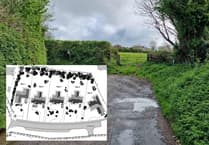


An example of this is one for an outline permission for 20 dwellings on land with reserved matters for appearance and scale; the reserved matters would require further permission later for their inclusion.
Other types of applications include pre-application advice requests, where would-be developers submit often outline proposals to a local authority to ascertain whether it is likely to gain support or not prior to submitting a planning application.
The vast majority of applications are decided by planning officers employed by a local authority under ‘delegated powers’, meaning they do so on behalf of their employer, however, some applications are ‘called in’ by local councillors to be discussed at an area’s strategic planning committee meeting, meaning the final decision rests with a committee of councillors.
Stables could be converted
AMENDMENTS to plans seeking to convert stables and linhay into a bakery and teaching space if plans are approved by Torridge District Council.
A wildlife tower which was proposed in the initial application from 2024 has already been constructed and is in use.
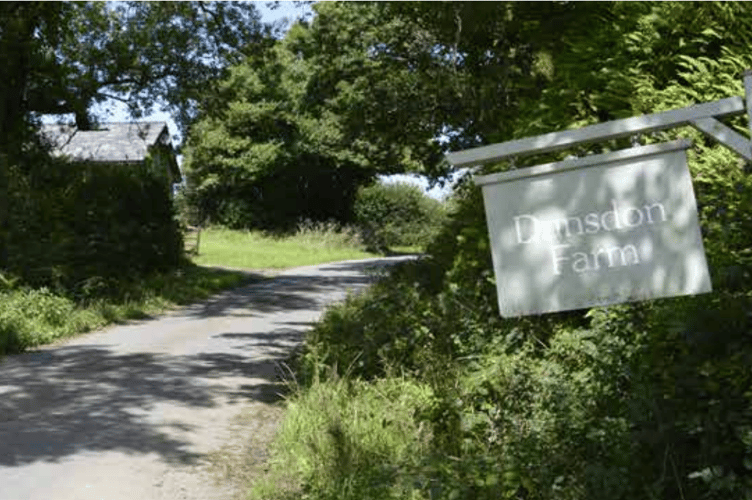
The application concerns Dunsdon Farm in Pancrasweek and it was made by Mr Adam Newey.
He is seeking the council’s approval to change plans previously approved relating to the conversion of the stables and linhay.
The work is part of the owners’ efforts to diversify what the farm offers, particularly in relation to tourism.
The applicant told the council: “The applicant wishes to alter the proposed layout of the teaching space (within the existing linhay) to include an oven flue, and a covered pergola canopy within the existing walled courtyard.
“The remainder of the proposals (glazed extension plus bakery conversion of the existing stables) remain as per the extant approval.
“No changes to the number of vehicle movements and opening hours are proposed. Note that this application refers to the proposed bakery/teaching space only; the wildlife tower was completed as per the extant approval in July/August 2025.”
The application can be viewed using reference 1/0285/2026/FUL on the Torridge District Council planning portal.
No plan for disabled people
DISABLED people in Cornwall face a scarcity of accessible homes with recent research by a housing association revealing that there is no planning policy for new wheelchair user homes.
There are 3,070 households in Cornwall waiting for an accessible social home, 361 of which need a wheelchair user property and there are zero accessible social homes available, as of February 2026, Habinteg Housing Association’s research reveals.
Wheelchair users make up 11 per cent of the waiting list yet there is no current Local Plan policy for development of new wheelchair user homes.
However, a spokesperson for Cornwall Council said that a number of initiatives are under way, including planning approval granted for five Extra Care schemes across Cornwall which will offer around 350 units that are all wheelchair accessible.
Habinteg’s report, A forecast for accessible homes 2025, reveals that the South West is planning to build one wheelchair user home (known as M4(3) in building regulations) for every 810 people over the next 10 years – that’s lower than the national average of one new wheelchair user home per 538 people.
Cornwall resident and wheelchair user Abigail Dorrington-Young, 31, has struggled to find suitable accommodation for several years in Camborne.
“In my previous rental home, which didn’t meet my needs, I was told by an occupational therapist that it would be best that I stayed where I was because I’d be waiting ten years for an accessible council home to become available,” she said.
Ms Dorrington-Young has recently decided to move in with her partner who rents an M4(2) accessible and adaptable Habinteg home, which they are adapting with the help of a Disabled Facilities Grant.
“The grant is paying for a walk-in shower, which will help a lot as I struggle to step in and out of the bath to use the existing shower. While I can currently use stairs independently, I may struggle further down the line,” Ms Dorrington-Young said.
Currently, there are 3,961 adults and 581 children in Cornwall and the Isles of Scilly who are registered with the NHS wheelchair service, according to the latest data published by NHS England. The 2021 Census showed that over a quarter (25.9 per cent) of Cornwall’s population is aged between 65 and 74 years old.
Cornwall’s current Local Plan requires only 25 per cent of new homes, on developments of ten or more new dwellings, to meet M4(2) requirements. In response to an enquiry by Habinteg, Cornwall Council stated that a higher proportion of M4(2) homes may be delivered through affordable housing.
Cornwall starts work on a new Local Plan this summer, which will set planning policy until 2050 and will be adopted in early 2029.
Habinteg’s director of social impact and external affairs Christina McGill said: “This new plan provides a great opportunity for Cornwall to increase its target for M4(2) homes across all tenures, as well as including a target for M4(3) homes. We’d like to see Cornwall go beyond the Government’s proposed new national expectation that at least 40 per cent of new homes should be built to M4(2).
“A dearth of accessible properties has serious consequences for individuals – including reducing a person’s independence, wellbeing and life chances. Society suffers too, because inaccessible homes drive unnecessary demand on public health and social care services by reducing people’s independence.”
A spokesperson for Cornwall Council said: “Our Specialist and Supported Housing Strategy published in 2023 includes a detailed needs analysis of the different specialist housing needs. It features a number of initiatives that are already under way, including planning approval granted for five Extra Care schemes across Cornwall which will offer around 350 units that are all wheelchair accessible.
“In the meantime, we continue to work with specialist care providers and developers to maximise the delivery of accessible and supportive housing. This has resulted in multiple new schemes now in the planning and development stage.
“Later this year we are reviewing our Local Plan which will be a key opportunity to strengthen policies that require accessible and adaptable housing in new developments.
Find out about planning applications that affect you by visiting the Public Notice Portal.
“We will be engaging and consulting widely during this process, including with disabled residents and local disability organisations, to ensure that lived experience informs future housing policy and delivery.”
Comments
We've recently changed our login process. If you have an account for commenting, you will need to re-register on the login window.
This article has no comments yet. Be the first to leave a comment.