
-Callum-Turner-(Liam)_Courtesy-Bosena_-Photo-by-Ian-Kingsnorth.jpeg?trim=0,2,1,0&width=752&height=423&crop=752:423)
‘CORNWALL is the centre of the world’ according to BAFTA-winning film director Mark Jenkin, however, its on-screen representation is often far from perfect.
Standing in front of a packed screening in the town he grew up in, the Cornish director admitted that it was screenings like this that he gets most nervous about when releasing a new film. Not because of the quality of his work, but because of the potential scrutiny surrounding the authenticity of his portrayal of Cornwall and ‘Cornishness’.
“I know I spend a lot of my time moaning about how Cornwall is represented on screen by other people,” he told the crowd. “So, there is a bit of self-inflicted pressure to try and get that right from my point of view, but it’s always a relief to get a good response from a Cornish audience.”
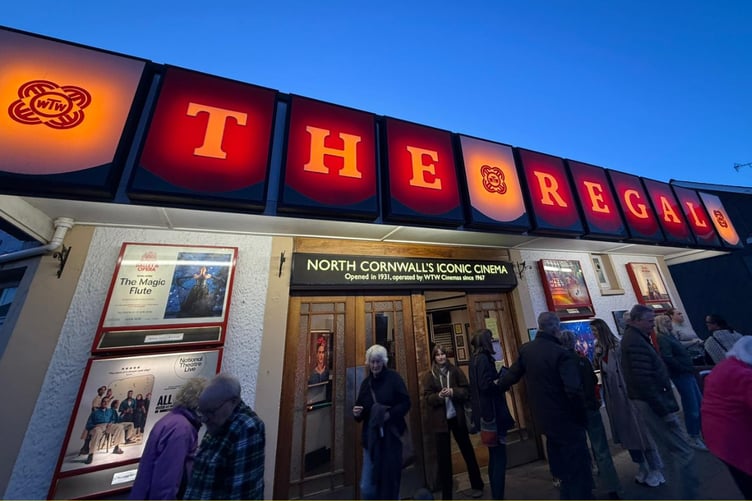
Despite Mark’s concerns, there was no need to fear following the early screening of his latest production Rose of Nevada at The Regal cinema in Wadebridge, as he held every member of the audience in the palm of his hand for the entirety of the film’s one hour and 54 minute runtime.




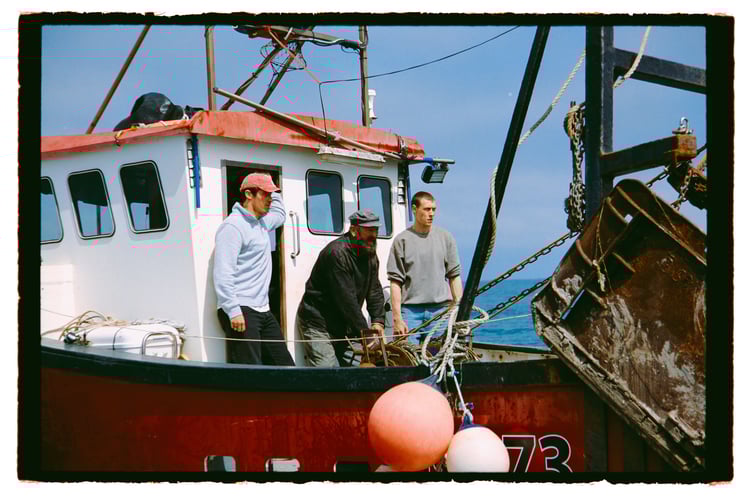
From the director of Bait and Enys Men, Rose of Nevada follows the tale of three Cornish fishermen as they embark on a journey following the return of a ‘ghost ship’ 30 years after it went missing. Scrubbed of its cursed name, the boat is put to good use, trawling fish for the local community once again – but when the three unlikely crewmates return to shore, things aren’t quite as they left them.
Mark has become known for his approach to filmmaking, utilising hand-wound cameras which don’t capture on-location sound.
Speaking to us, Mark explained: “I get told a lot about how different my films might feel compared to other people’s films because of the way they’re made. I shoot on film, which isn’t unusual these days, a lot of people have gone back to shooting on film, but I shoot 16mm rather than 35mm.
“I use a clockwork camera that is non-sync, so I don’t record any location sound either, the camera only runs for 27 seconds before it needs to be wound again, so the shot durations are quite short.
“I think all those technical considerations mean the film has a distinct aesthetic feel when they’re finished. It doesn’t matter what I’m making the film about, or who’s in it, or where we shoot it, I keep getting told that as soon as it starts, you can tell it’s one of my films.”
And there is no doubt that Rose of Nevada is a Mark Jenkin film. It has been masterfully crafted, with thought and intention given to every shot, every sound, and every cut, providing a refreshing contrast to the conveyor-belt productions that we see so often thrust into cinemas and onto streaming.
The director’s love for the craft translates on-screen into an eery, beautiful, and unsettling tale. From the outset, a series of still-images of fishing-related infrastructure sets the tone. Bright scenes are offset by the uncomfortably aged textures adorning chains and metal pilings signalling a town which has already seen its best years.
However, it isn’t just the film’s craft which shines, it is wonderfully complimented by a number of outstanding performances. In the leading role, George MacKay delivers one of his best performances as Nick, perfectly balancing his character’s anger, frustration and tenderness.
Alongside him, Callum Turner provides a restrained juxtaposition in his portrayal of Liam, the carefree, money-motivated member of the crew with nothing to lose.
Unsurprisingly, the film’s characters don’t seek to stereotype Cornwall’s fishing communities – with the script written by Mark himself.
“A really important thing for me was that the fishing was unromanticised,” explained Mark following the film’s screening. “I’ve always been really aware that fishermen are either romanticised or demonised, and there is nothing in the middle.
“You quite often see a fisherman who’s got his boat, he’s got a few pots, and he goes out and he has a lovely time, and he catches a couple lobsters and then he goes to the pub and sells them.”
Instead, the production provides a measured and understated depiction of these working men, demonstrating the balance of danger and necessity. With these community’s doing whatever they can to ensure their success – including risking their lives.
Sitting in the packed screening, surrounded by proud Cornish people, I would be lying if I said I wasn’t a little skeptical to begin. Not only does the film’s pacing lead viewers in slowly, there was also a lot of pressure for the film to perform, especially in front of this home crowd. However, it is safe to say that Rose of Nevada is as good as any ghost story or folktale ever told.
As I sat in my seat I felt as though I was one-on-one with an old Cornish droll teller.
The story lures viewers in with its steady start, mimicking the rurality of its location. Though despite its gentle beginnings, it hits audiences with a twist which makes them sit forward in their chair and keep their eyes glued to the screen as they watch the story unravel in front of them.
In an age in which production companies continue to look elsewhere to provide the excitement necessary for a big-screen story. Mark is not only a breath of fresh air, with his hands-on and considered approach, but he is also proving that the UK and Cornwall can shine in a big-picture production. With its culture and communities able to grip audiences across the world.
Whether you’re a cinephile, a regular movie-goer, or someone who can’t remember the last film they saw in a cinema, Rose of Nevada is unlike anything you’ve seen before and could be the must-watch film of the year.
The film is set to release across UK and Irish cinemas on April 24, 2026. Has there ever been a better time to see Cornwall shine on the big screen?
Comments
We've recently changed our login process. If you have an account for commenting, you will need to re-register on the login window.
This article has no comments yet. Be the first to leave a comment.