
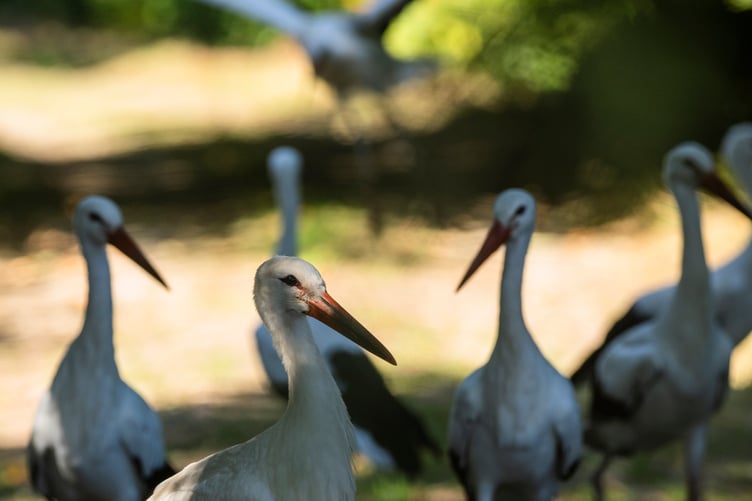
THE SIGHT of storks in the skies and land around St Breward has been brightened after the release of a significant number of the creatures.
The event marked the culmination of years of effort by charity The Cornwall Stork Project and their partners to bring White Storks back from local extinction and see them return to our landscape once more.
The project overseeing the species reintroduction programme was set up by Yan Swiderski at Wild Hamatethy in 2021, and was inspired by the influential ecologist Derek Gow.
All of the birds were donated to the charity shortly after it was established in 2024. The charity is supported by several important donors and partners.
These include The Screech Owl Sanctuary and Animal Park, Birdworld, Cornwall Nature Conservancy, Paradise Park Zoo and Cornwall Wildlife Trust.
Cornwall Nature Conservancy breeds a small number of White Storks in captivity to add to the Stork Project numbers and the Screech Owl Sanctuary hand-rears some of our Stork chicks to boost the numbers.
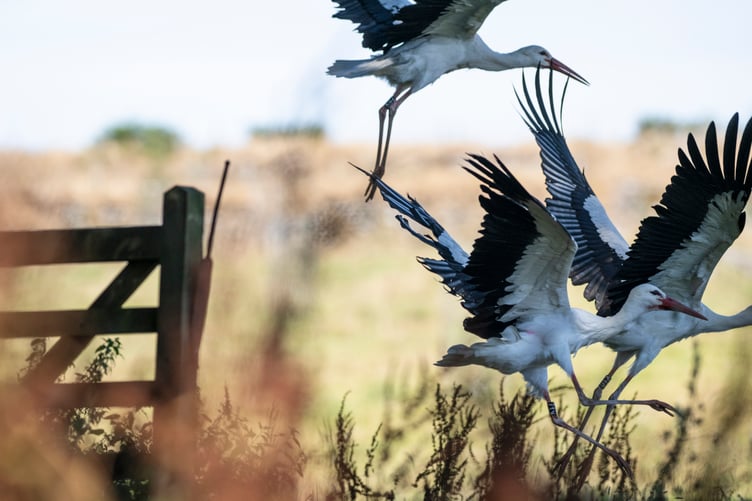
The parents have been sourced from rescue centres and sanctuaries in Europe and the UK and will continue to remain at Wild Hamatethy to breed annually. A first, single chick was hatched in 2024, seven more in 2025 and 13 more in 2026.
Now numbering 21, the young flock has reached critical mass for an anchor colony, necessary for successful migration and homebound return.



The charity is fundraising to import more rescue birds from Europe and more aviaries will be established across Cornwall to speed up the species' recovery.
After their release, the Cornwall Stork project says that it expects their first ever Cornish Storks to migrate as a flock to southern Europe, possibly joining flocks from Sussex which have regularly visited Cornwall in the late summer.
This is because Storks demonstrate something which is known as 'natal philopatry'.
In three or four years, once at breeding maturity, homing instincts will kick in and they will retrace their flight, homeward bound to Cornwall to breed in the same colony where they were hatched, meaning that the sight of storks around the Duchy could soon be a regular occurrence.
It is believed that most British people today have never seen a Stork, with the creatures have been missing from our landscape for hundreds of years.
Records indicate that that the last breeding pair was noted in 1416, with their demise not only been due to hunting and persecution but also ‘landscape scale habitat destruction’.
Yan Swiderski of The Cornwall Stork Project said: “Having been absent for centuries we’ll soon see these huge birds flying free in the summer skies of Cornwall.
“One day we may witness their return from migration to come and nest in the same place they left from”.
Details on how to support the scheme can be found on the Cornwall Stork project website.
Comments
We've recently changed our login process. If you have an account for commenting, you will need to re-register on the login window.
This article has no comments yet. Be the first to leave a comment.