
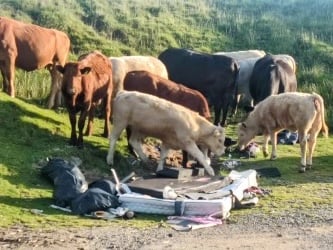
A DEVON-based farmer has called for stricter fines after an increase in fly-tipping.
Winston Thorne, a Devon Farmer, has said that fly-tipping has become a gradually increasing issue, with people taking advantage of his land to dump their waste. As a result, he has called for policy change that benefits farmers who are targeted in these crimes.
According to figures, fly-tipping is one of the most persistent environmental crimes in England, with at least 3,000 incidents occurring per day. The problem is being driven by a combination of rising disposal costs, landfill constraints, and inconsistent enforcement, resulting in an increasing number of illegal dumping spots.
For farmers, the issue is worsened by the way fly-tipping on private land is handled. Unlike waste dumped on roadsides or council-owned land, fly-tipped waste on farmland is usually the responsibility of the landowner to remove, even when they are clearly the victim of the offence.


_at_Devonport_Junction_-_geograph-org-uk_-_7180950.jpg?width=209&height=140&crop=209:145,smart&quality=75)
While official statistics do not break down fly-tipping data by land type, such as farmland, survey data suggests the problem is widespread.
A national survey found that 52 per cent of farmers have experienced fly-tipping on their land, and 30 per cent have been affected by large-scale fly-tipping activities such as multiple or lorry-load dumps. Furthermore, almost half (48 per cent) said fly-tipping has increased in recent years, suggesting the problem is intensifying rather than improving.
These figures indicate that fly-tipping on private spaces is as much of an issue as fly-tipping in public spaces, where it is less visible and less likely to be recorded in public data.
Fly-tipping can create a significant and often costly issue for farmers; in most cases, farmers are responsible for arranging and paying for the removal of waste on their land. Depending on the scale of the problem, costs can range from £1,000 to £100,000, particularly if hazardous waste such as asbestos is involved.
It can also pose serious safety risks to business operations. Hazardous waste can contaminate soil, harm livestock, and damage crops. Dumped materials can block access routes, interfere with machinery, and create health and safety risks for workers and visitors. Together, these issues place an additional burden on farmers, often affecting both their well-being and their confidence in enforcement authorities to address the problem effectively.
Commenting on the issue, Winston Thorne said: "My family has been farming for generations in our area. Fly-tipping was never a huge issue, but it has steadily increased throughout the years. We're located rurally, and much of our farm can't be covered with cameras. Unfortunately, some people like to take advantage of this and use our land to dump their waste.”
"What's even more unfortunate is that the responsibility of the clean-up, often equating to thousands of pounds, is left to the farmers themselves. For small, family-run farms such as ours, this is highly damaging. I would welcome stricter fines for fly-tipping, and a policy change that benefits farmers who are targeted in these crimes."
Comments
This article has no comments yet. Be the first to leave a comment.