
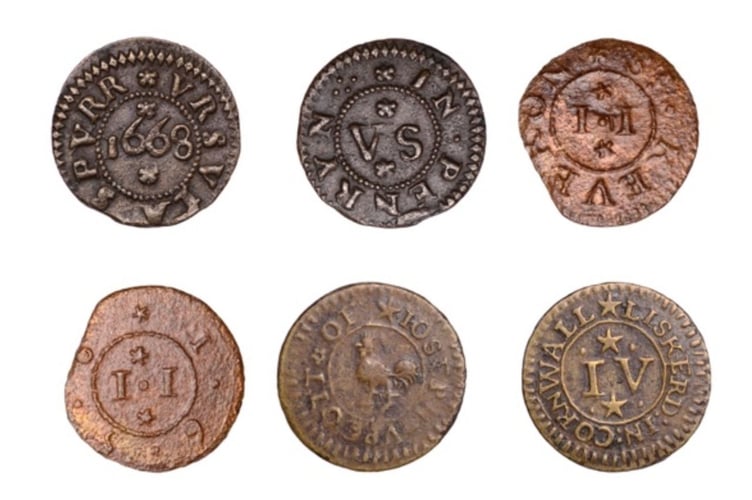
A COLLECTION of 17th-century tokens — originally from towns across Cornwall including Truro, Launceston and Fowey — has sold for more than £21,000 at auction, surpassing their estimate by over £6,000.
Some 400 years ago, tokens were used as a substitute for currency, issued by private individuals merchants and organisations.
Peter Preston-Morley, special projects director at Noonans, explains: “Tokens were a currency substitute issued by private individuals, merchants and organisations when governments were not, for various reasons, issuing small change. They are mostly copper, although during the Napoleonic wars silver tokens were also made and circulated.
“Books focussing on the tokens of certain counties have been published, however no proper illustrated catalogue of the Cornish series has yet been published.”

.jpg?width=209&height=140&crop=209:145,smart&quality=75)
Now, a collection of more than 70 of such Cornish tokens, formed by Cornishman Mac McCarthy over three decades, has fetched a hammer price of £21,830 against a pre-sale estimate of £15,000 in an auction of British Trade Tokens, Tickets and Passes at Noonans Mayfair on Wednesday, April 22.
The highest price of the collection, which was 100 per cent sold, was paid for an exceptionally rare farthing from East Looe, which was dated from 1669 bearing the name of Richard Scadgell. The impressive item was sold for a hammer price of £1,000 against an estimate of £500 to £700, and was bought by a private collector living in Looe.
Another piece which sold for an impressive sum was a very fine and extremely rare farthing inscribed Ursula Spurr 1668 from Penryn. Purchased by a London-based dealer on behalf of a private collector, the item saw a hammer price of £850, more than twice the lower end of its original estimate.
Peter Preston-Morley says that such items can provide ‘gritty local detail’ that other records may not be able to fully represent. This is something which is clear when exploring the history the tokens from Penryn.
He explained: “Tokens can provide the sort of fascinating, gritty local detail that other records miss when it comes to creating a clear picture of the past and this is one example! There is evidence in the 1658 Will of Vincent Smaley, father of Ursula Spurr, that she was married to an unsatisfactory husband. Smaley left his daughter £8 per year during her husband’s life, but if he died, she was then to have £100 per year – presumably he felt the husband was not competent to handle such a large amount of money.”
Another token of note was an extremely rare farthing dating from 1669 from Truro, bearing the name Thomas Trewoolla realised a hammer price of £750 against a pre-sale estimate of £300 to £400. The purchaser of which lives in Truro.
However, these are not the only tokens which were sold at auction, the items came from all across Cornwall. The collection featured tokens for people who lived in St Keverne; East Looe; Penzance; Liskeard; Lostwithiel; Padstow; Penryn; Truro; Camelford; Falmouth; Helston; Launceston; St Ives; Fowey, plus many others.
Comments
We've recently changed our login process. If you have an account for commenting, you will need to re-register on the login window.
This article has no comments yet. Be the first to leave a comment.