
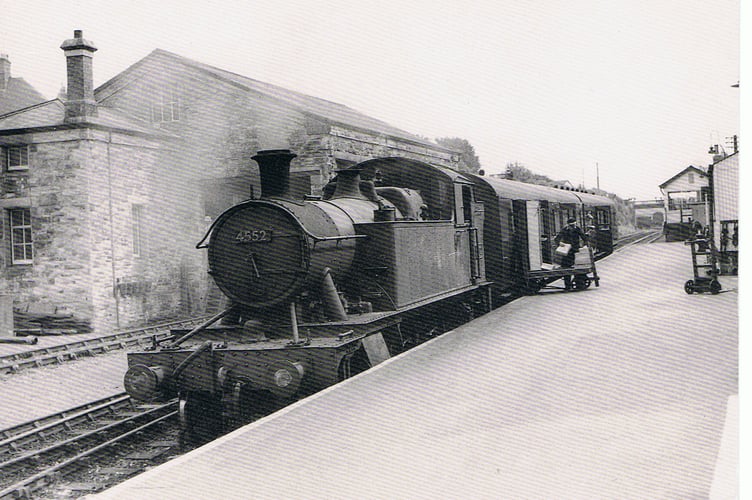
THE year is 1986 and a railway line which had played its own vital part in the history of the town which name it borne is looking tired, forlorn and unloved, three years on from the final services connecting the clay dries at Wenfordbridge with the Great Western Mainline at Bodmin Parkway (then known as Bodmin Road) had come to an end.
If it hadn’t been for the saving grace of being required to transport freight, the chances are that the line and station at Bodmin General would have gone the same way as Bodmin North had in 1967 after the Beeching bloodbath– closed for good and eventually demolished without so much as even a simple plaque to commemorate that it had ever existed at all.
The fact it remained open was literally only a saving grace – for the only other remaining line, the route to Wadebridge had already seen the remaining section of the line which had been among the first to open in 1834 lifted and obliterated after its closure to freight in 1978.
But in the time since Bodmin North fell afoul of the wrecking ball and Wadebridge had been abandoned, groups of railway enthusiasts across the length and breadth of the United Kingdom had made it their mission to preserve whatever they could of the history that had been obliterated.
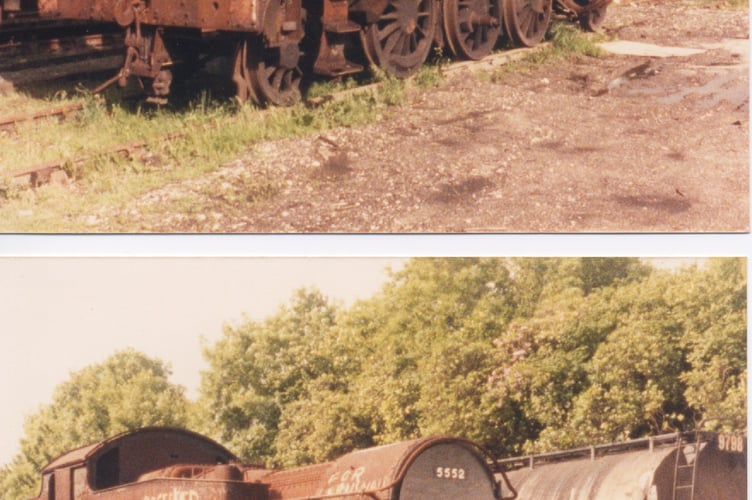
For some of these railway groups, they took to the scrapyards where British Rail had sent the locomotives to be scrapped – and for others, the ambitions went as far as saving individual railway lines.
One of those groups were determined to not let the route from Bodmin General to Bodmin Parkway go the same way as what had already closed and come 1983, there was a ticking clock from which they had only a limited time to strike to save their railway line.
In 1984, the Bodmin Railway Preservation Society was formed, determined to save what they could of the railway line that might otherwise be destroyed forever more.
The group began the efforts to preserve the branch line, with a view to reopening it as a heritage steam railway.
It was this group that formed the Bodmin Railway Preservation Society (BRPS) in 1984, and they in turn formed the Bodmin Railway plc in order to raise funds to purchase the line from Bodmin Parkway to Boscarne Junction, via Bodmin General. They were successful, and North Cornwall District Council (now part of Cornwall Council) secured the land from British Rail.
The first railway service to run under the group’s auspices was on June 1, 1986, powered by a small steam locomotive which had previously run at Devonport Dockyard. The 0-4-0 ST Number 19 performed shunting demonstrations at Bodmin General and was not only the first authorised train movements in the preservation era, but a sign of intent that a brighter future for the forlorn railway line was imminent.
In 1990, services between Bodmin Parkway and Bodmin General were restored, with the extension to Boscarne Junction coming in 1996, where it would intersect with the newly opened Camel Trail.
Bodmin Railway has been a regular fixture in the town’s life ever since, operating primarily steam locomotives but some heritage diesel too over its 6.5 mile of railway.
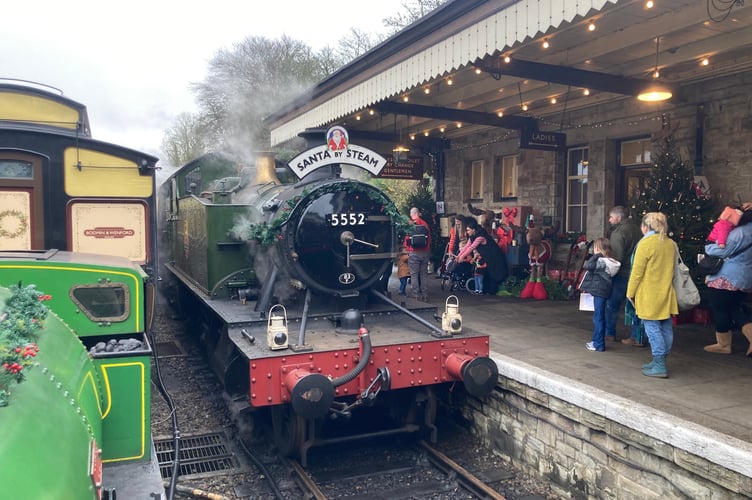
In 2020, the extended closure brought by the coronavirus pandemic saw the heritage railway face a situation where it wasn’t entirely sure whether it would ever re-open at all; with seismic efforts by the staff and its dedicated volunteers put in to saving the line after a lengthy period of little to no revenue.
However, out of the fire the railway rose again to the point where it is now marking 40 years since its first ever service with hopes high that the future could be brighter than ever before.
Comments
We've recently changed our login process. If you have an account for commenting, you will need to re-register on the login window.
This article has no comments yet. Be the first to leave a comment.