
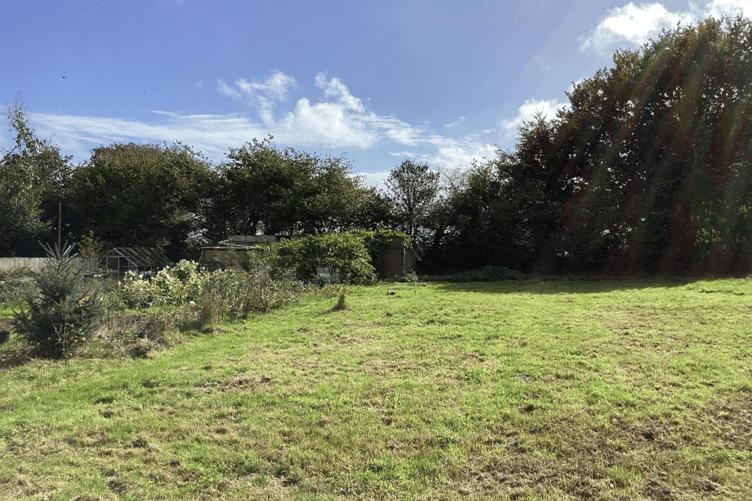
THE planning department at Cornwall Council has been warned that recent planning approvals within the former mining areas that comprise a UNESCO World Heritage designation could put it at risk.
It is a designation that puts parts of Cornwall’s former mining areas on a parity with the Taj Mahal, the Pyramids, Stonehenge, and the Great Wall of China with its inclusion being on the grounds of being a place of significance for the whole of humanity.
The strongly worded warning come in comments from World Heritage Site planning advice department in response to an application seeking outline planning permission with all matters reserved for a self build dwelling on Slade Park Road in Pensilva.
The application described the property as thus: “Outline planning permission is sought for one detached dwelling, with all matters reserved for subsequent approval. The illustrative plan indicates a single-storey, three-bedroom bungalow of approximately 135 m².
“The low profile is intended to respond to the site’s edge-of-village setting, reduce visual prominence and provide accessible accommodation capable of supporting long-term occupation. The proposed residential curtilage is deliberately limited. It provides a practical garden and amenity area while avoiding the domestication of the remaining landholding. No garage or carport is proposed”
In subsequent responses to the concerns, the applicants stated that it would be their intention to live at the property which would be on land that has been in their family’s ownership for the best part of half a century.
The applicants also detailed their long standing connections to the village of Pensilva with the proposed dwelling to be a replacement for their existing home elsewhere in the area.
They also said that the property would be a ‘converted barn’ type dwelling with the rest of the land used as a smallholding.
However, the application was refused on the grounds of the potential impact it could have on the area, with the land at the centre of the application believed to have had a historic value as an example of a mineworker’s smallholding.
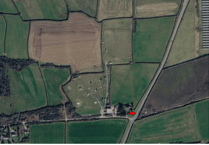
The World Heritage Site planning office described the reason why the application must be refused, stating: “Both the application site and the fields adjacent remain fully intact and undeveloped into the present day where they represent the bulk of the former mineworkers' smallholdings here. Map regression clearly shows the plots morphology with dwellings present on the 1st edition mapping and lost by the time of the second edition mapping. This ties in with the later development of Pensilva as a settlement and its surrounding smallholdings as noted within the Cornwall Industrial Settlement Initiative study (CISI) which notes the following:



“There were some 20 houses recorded at Bodminland and Middlehill in the 1851 census (nearly all with several lodgers), while the naming of the public house, the Victoria and the road leading on from Fore Street, Jubilee Road, suggests that the majority of the settlement had developed by the time of Queen Victoria's jubilee in 1862 ' a large settlement had been created in little more than 10 years.
“It was described in 1874 (Lake's Parochial History) as a comparatively new village chiefly inhabited by miners with a population of about 2000. This was as large as many of the ancient established towns of Cornwall.
“Pensilva, like Darite and Minions evolved entirely in response to the industrial activity taking place on the moorland above. There was no development at Pensilva other than a farm until the greatly expanding mine at South Caradon required accommodation to house its workforce, which by 1860 had reached 600 men.
“The heritage statement states that no named mineworker could be found in occupation of the plot, however this is due to the fact that the plot was developed as a smallholding after the 1840 period where a Tithe apportionment record is normally not available, making a nominal linkage through historic Census data largely impossible. This is the case for much of Pensilva due to the influx of mineworkers occurring across a period of time largely after the 1840s.
“The WHS Office notes that the field is not simply illustrative of this attribute type, it was almost certainly specifically created and used as part of a mineworkers' smallholding and should be considered as an inscribed attribute feature of the WHS.
“All seven key attributes across the WHS landscape are equal in terms of their status and enable for the WHS to maintain its integrity and authenticity that formed the basis for the WHS to be inscribed and that enable for it to retain that status going forward.”
Turning its fire towards Cornwall Council’s planning department, the world heritage site officer continued: “The WHS Office is concerned that there appears to be a distinct difference in how applications are being determined by the LPA (local planning authority) in this section of the WHS as opposed to others. The result is that cumulative harm is occurring in this section of the WHS to which this application would add more harm.
“The approach taken by the LPA in assessing harm to this specific attribute type in this locality appears at odds with the LPA's determination of applications elsewhere within the WHS. This approach is causing harm to the WHS on a cumulative basis contrary to current planning guidance and policy within the Development Plan, WHS Management Plan and the most recent revision of the NPPF.
“This proposed development will result in direct harm to the retained historic smallholding plot that would be overwritten and which is a key attribute that directly expresses the OUV of the WHS. Its loss to housing development will also result in further cumulative harm to the overall integrity and authenticity of the WHS.
“In light of all of the above, the WHS Office strongly objects to this proposed development.
“Due to the level of harm as now is occurring within this section of the WHS and it is requested that the LPA formally consult with the statutory consultee Historic England, as they will now need to make comments on the application.
“The WHS Office will inform Historic England of its response as they will also need to make a determination as to whether the issue of cumulative harm here now needs to be referred to the UNESCO World Heritage Centre.
“While no further comment is deemed necessary at this time, it should be noted that World Heritage Sites are designated by the United Nations, Educational, Scientific and Cultural Organization (UNESCO) as places of significance to the whole of humanity. This puts the Cornish Mining World Heritage Site on a par with international treasures such as the Taj Mahal, the Pyramids, Stonehenge, and the Great Wall of China.
“Harm to any attributes of Outstanding Universal Value (international significance) within the World Heritage Site risks the loss of this status for the entire designated property across Cornwall and west Devon.”
Refusing the application, Cornwall Council’s planning department told the applicants that it had done so on the grounds that it was in the countryside and divorced from any settlement with poor pedestrian connections and thus leading to over reliance on private vehicles.
Find out about planning applications that affect you by visiting the Public Notice Portal.
It also said that it would erode the area’s ‘strong rural character’ and dilute its historical significance and would therefore not protect, conserve or enhance the undeveloped character of the area.
Comments
We've recently changed our login process. If you have an account for commenting, you will need to re-register on the login window.
This article has no comments yet. Be the first to leave a comment.