
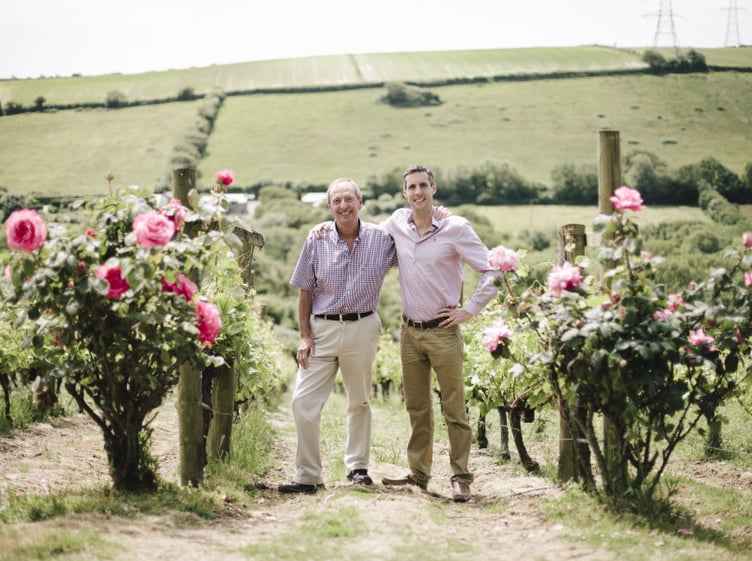
Sam Lindo, second-generation winemaker at the family-run Camel Valley vineyard at Nanstallon, near Bodmin, said the sunshine had encouraged the grapes to ripen earlier and develop more flavour, but the impact on acidity and the character of the finished wines remained unknown.
“This hot, dry weather is very good, but for us it’s very much uncharted territory,” he said.
Camel Valley has built its reputation on producing slender, crisp and light wines, but Sam said this year’s conditions could push the vineyard into new territory.
“We’re going to have more flavour, we’re not sure what’s going to happen to the acidity,” he said. “It’s very much unknown.”
The vineyard has around 24,000 vines and typically produces about 150,000 bottles of wine each year. However, the lack of rainfall could mean a smaller volume of juice from this year’s crop.
“The grapes have less juice in them, so although you have the same number of bunches you will get less juice out of them,” Sam explained.
Drought was declared across Devon, Cornwall and the Isles of Scilly in July, while the Met Office has warned that extreme weather could become increasingly normal for the UK.
For Camel Valley, that changing climate could eventually mean changing the varieties of grapes grown on the slopes above the River Camel.
Sam believes vineyards across Europe are already facing the same challenge. Bordeaux and Champagne are among regions looking at varieties better able to cope with hotter conditions.




“Everybody in the world has currently got the wrong variety of vines in the ground that they will need for 20 years’ time,” he said.
However, he believes Cornwall can learn from vineyards further south.
“Luckily for us it is well-charted territory,” he said. “We only have to look further south to see what we need to do next. The future is already here, it’s somewhere else.”
The Lindo family’s own story shows how dramatically wine production has changed in Cornwall.
Former RAF pilot Bob Lindo and his wife Annie planted their first 8,000 vines at Camel Valley in 1989, after buying their farm and initially keeping sheep and cattle. Watching the grass turn brown during hot summers convinced them the sun-drenched slopes could be ideal for vines.
Bob gained winemaking experience in Germany, while both he and Annie studied viticulture before building their own winery. Their gamble paid off. Camel Valley went on to win national and international awards, including major recognition for its sparkling wines. Sam returned to the family business in 2002 and eventually took over as winemaker, following an award-winning career that included success at the International Wine Challenge and Decanter World Wine Awards.
Today, the family business continues to produce wines enjoyed across Cornwall and further afield. But this year presents a new challenge - adapting to a climate that is becoming hotter and drier.
Comments
We've recently changed our login process. If you have an account for commenting, you will need to re-register on the login window.
This article has no comments yet. Be the first to leave a comment.