
AN application to build up to three houses on land near Camelford has been refused by Cornwall Council.
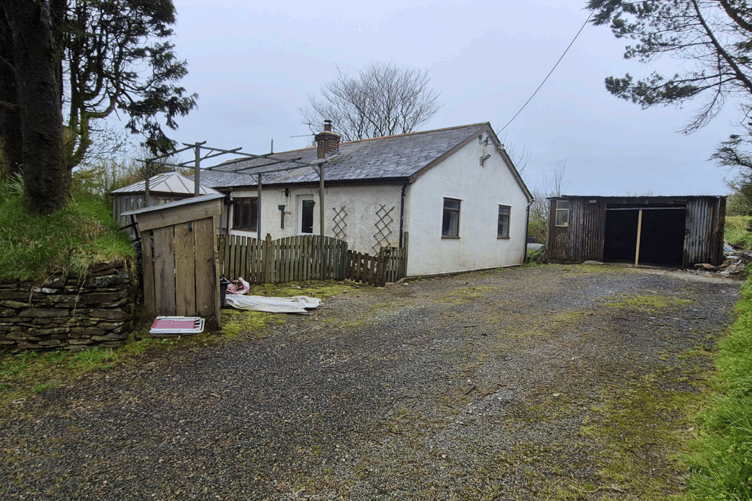
Mr Englefield applied for a permission in principle to build up to three houses on land surrounding his property at Moor View in Starapark.
A Permission in Principle (PiP) is a streamlined, two-stage route for obtaining planning permission for minor housing-led developments in the United Kingdom. It separates the basic considerations of a proposed site (location, land use, and amount of development) from the detailed technical designs required later.
At the first stage, the local planning authority, in this instance Cornwall Council, assesses only if the fundamental concepts (the proposed location, how the land will be used, and the number of homes) are acceptable. Local authorities must typically decide on these applications within five weeks.
If this is granted, then permission to build cannot be granted until an approval of the technical details consent stage.
The applicant’s planning agent told Cornwall Council: “The application proposes the development of one to three dwellings within the established rural settlement of Starapark, situated between Davidstow and Camelford.
“Starapark forms a coherent cluster of residential properties with a clear identity and long‑standing recognition as a named hamlet. The site lies within the built extent of this settlement and represents a logical and proportionate opportunity for small‑scale growth consistent with Policy 3 of the Cornwall Local Plan.
“The proposal seeks Permission in Principle (PiP) for residential development comprising up to 3no. dwellings. The site is currently occupied by a dwelling, associated outbuildings and domestic curtilage.
However, Mr Englefield’s application was refused by Cornwall Council.
Camelford Town Council said in its consultation response: “Camelford Town Council noted that the application lacks clarity regarding the status of the existing structure on the site.
.jpeg?width=209&height=140&crop=209:145,smart&quality=75)

.jpeg?width=209&height=140&crop=209:145,smart&quality=75)

“The council resolved to support the application for the construction of one dwelling, in the place of the existing structure, plus one additional dwelling. Alternatively, should the existing structure remain, the council also resolved to support the development of no more than one dwelling on the site.”
There had also been objections from members of the public on the planning application.
Refusing the application, Cornwall Council told Mr Englefield: “The application site is located at Starapark within a dispersed pattern of countryside development that does not comprise a settlement with a clear form, function or definable boundary suitable for housing growth. The site is poorly related to day to day services and facilities and future occupiers would be heavily reliant on private motor vehicle use to access employment, education, healthcare, retail and other everyday needs.
“Consequently, the proposal would fail to represent a sustainable pattern of development and would be contrary to the spatial strategy of the Cornwall Local Plan. Whilst the Council is currently unable to demonstrate a five year supply of deliverable housing sites and the presumption in favour of sustainable development is engaged, the Local Planning Authority is not satisfied that the site represents a sustainable location for additional residential development.”
Find out about planning applications that affect you by visiting the Public Notice Portal.
It added that the proposals conflict with multiple policies of its planning policies, including one that seeks to secure sustainable patterns of growth and development in locations that minimise the need to travel and offer genuine choices of transport modes.
Comments
This article has no comments yet. Be the first to leave a comment.