
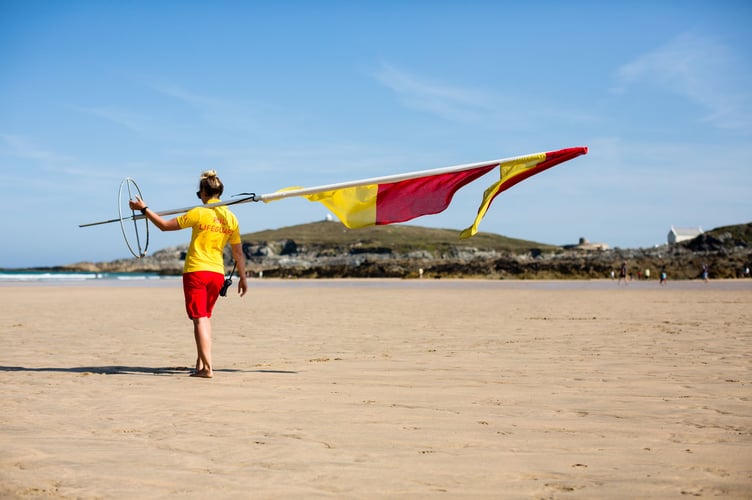
RNLI lifeguards have saved more than 1,000 lives on beaches in the south west over the past 25 years.
They have saved 1,098 lives and aided 167,592 people through rescues, interventions and delivering casualty care.
The RNLI lifeguards have responded to 185,954 incidents and carried out more than 22 million preventative actions.
The charity took action in 2001 when stark figures showed 200 lives were lost on UK beaches.



Lifesaving clubs were already patrolling but not on the scale required. The RNLI wanted to provide a solution and established a co-ordinated rescue service.
The RNLI worked with lifesaving clubs and beach owners to pilot 15 lifeguarded beaches in the south west, which included Crantock, Fistral, South Fistral, Towan, Great Western, Porth, Mawgan Porth, Tolcarne, Watergate, Tregonhawke, Freathy, Sharrow, Tregantle, Greenhill and Weymouth.
Twenty lives were saved in the first year, which led to an official service being formed, and the service has since expanded to reach over 90 lifeguarded beaches in the region and 245 nationally.
Safety literature information and warning signs were also developed for beaches so visitors knew what dangers they may encounter and how to keep themselves safe.
Peter Dawes, RNLI lifeguard general manager, said: “Thanks to RNLI lifeguards our beaches are safer places, so we can enjoy our time at the coast and return home safely at the end of the day.
“Around 95 per cent of a lifeguard’s work is prevention. They keep beachgoers safe by educating them about water safety and spotting the dangers before accidents happen.
“RNLI lifeguards past and present have kept millions of beach visitors safe over the past 25 years and will continue to do so for years to come. If you are planning a visit to the coast this summer, please remember to visit a lifeguarded beach.”
Lewis Timson, the lead lifeguard supervisor in Newquay, was part of the first RNLI lifeguards to be on beaches in 2001 when he was 18-years-old. Before the RNLI, Mr Timson was part of a local surf school which would operate lifeguarding patrols alongside teaching surf lessons.
Mr Timson said: “The RNLI already had a strong, 180-year history of providing a front-line emergency lifesaving service and were able to bring the knowledge and expertise over from the lifeboat service to the lifeguards.
“The equipment and the training from the RNLI really set the gold standard. As soon as I was working for the RNLI, I knew that it was what I wanted to do.’
Lewis has worked overseas as well as on Cornish beaches and when asked whether lifeguarding had changed over the past 25 years, he continued: “The fundamentals are the same.
“We still need well trained, capable, skilled lifeguards on our beaches.
“But there has definitely been a shift with how we keep people safe. This has developed alongside the amount of people we now get visiting our beaches and going in the water. Lifeguarding now is such a proactive service, being proactive is the standard and the new normal’.’
Comments
We've recently changed our login process. If you have an account for commenting, you will need to re-register on the login window.
This article has no comments yet. Be the first to leave a comment.