
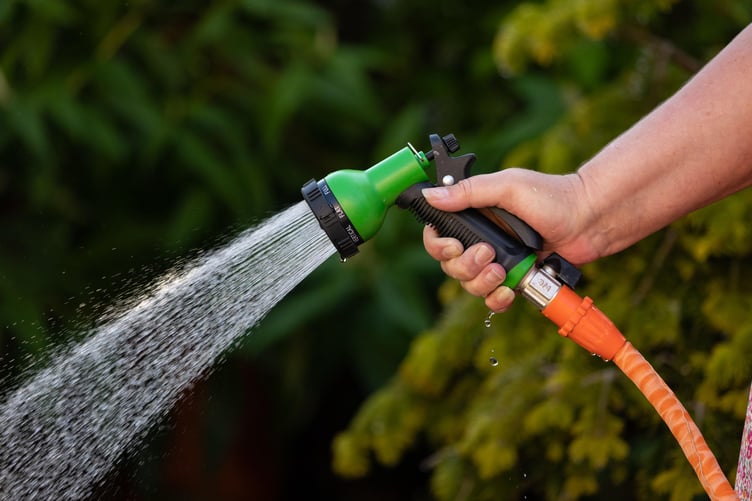
SOUTH West Water has warned that its hosepipe ban across Devon and Cornwall could remain in place for some time as the region’s water supplies recover from an exceptionally dry summer.
The restrictions, introduced in early August, were brought in after weeks of hot weather and significantly below-average rainfall put increasing pressure on local water resources.
The company has now said there is no immediate date for the ban to be lifted, with the decision dependent on how quickly water storage levels recover.
South West Water is also preparing for the possibility of another dry summer next year, adding further uncertainty over when customers will be able to return to unrestricted hosepipe use.
A spokesperson for the company said: “The hosepipe ban is in place to allow our water resources and the natural environment time to recover following a very dry summer.
“Lifting the ban will depend on how our storage recovers in preparation for what is being predicted to be another very dry summer next year.”
The ban means customers face restrictions on a range of activities involving hosepipes, although South West Water has announced a number of exemptions.
The restrictions came after a summer which saw five heatwaves and temperatures regularly climb above 30C, increasing demand for water at the same time as supplies came under growing pressure.
South West Water said it is now taking steps to increase production and reduce the amount of water lost through leaks as it works to rebuild supplies.
The spokesperson added: “We are working hard to reduce leakage and maximise water production to support this recharge and we thank all of our customers who are taking steps to use water wisely every day.




“We are monitoring the situation closely and will continue to provide updates.”
Customers across Devon and Cornwall have therefore been urged to continue using water carefully while the company assesses how quickly reservoirs and other water sources recover.
The latest warning means households could face continued restrictions into the autumn and potentially beyond, depending on rainfall and the condition of local water resources.
Comments
We've recently changed our login process. If you have an account for commenting, you will need to re-register on the login window.
This article has no comments yet. Be the first to leave a comment.